Build a Career Understanding the Earth
Geoscientists investigate how the Earth works and apply that knowledge to practical problems. They study rocks, minerals, soils, groundwater, fossils, landscapes and geologic structures; interpret field, laboratory and remote-sensing data; prepare maps and models; evaluate natural resources and hazards; and communicate their findings to clients, agencies and communities.
If you are curious about the planet, enjoy solving problems and want work that can combine science, technology, field experience and public service, geoscience may be a strong career choice.
Why Geoscience Matters
Nearly every community depends on geoscience. Decisions about water supplies, energy, critical minerals, environmental cleanup, construction, land use and natural hazards all require an accurate understanding of the Earth beneath us.
In Texas, geoscientists contribute to:
- Locating, evaluating and protecting groundwater resources.
- Investigating and cleaning up contaminated soil and groundwater.
- Developing oil, natural gas, geothermal, uranium and other energy resources.
- Finding and responsibly developing minerals needed for modern technology and infrastructure.
- Evaluating sites for buildings, roads, dams, waste facilities and other projects.
- Understanding floods, coastal change, subsidence, earthquakes, landslides and other hazards.
- Mapping the subsurface and turning complex scientific data into practical decisions.
Where Geoscientists Work
Environmental Geology and Hydrogeology
Environmental geologists and hydrogeologists investigate groundwater systems, water quality, contamination, waste management and environmental restoration. Their work often supports public health, regulatory compliance and responsible land and water management.
Energy and Carbon Management
Geoscientists help locate and manage conventional and emerging energy resources. Their skills also support geothermal development, underground energy storage and the evaluation of geologic formations for carbon capture and storage.
Mining and Critical Minerals
Economic geologists explore for mineral deposits, evaluate their size and quality, guide drilling and sampling programs and help plan responsible resource development and reclamation.
Engineering Geology and Geotechnical Work
Engineering geologists evaluate soils, rock, faults, slopes and groundwater conditions that can affect construction and infrastructure. They work closely with engineers, planners, contractors and public agencies.
Government, Research and Education
Federal, state and local agencies employ geoscientists in water resources, environmental protection, geological mapping, hazards, parks, public lands and natural-resource management. Universities, museums and research institutions employ geoscientists in teaching, research and public education.
Mapping, Data and Remote Sensing
Modern geoscience uses geographic information systems (GIS), satellite imagery, drones, geophysics, databases, computer models and three-dimensional visualization. Students who combine geoscience with data analysis, programming or geospatial technology can apply those skills across many specialties.
Planetary Geoscience
A small but growing field applies terrestrial geology, geochemistry, geophysics and remote sensing to the Moon, Mars, asteroids and other planetary bodies. These positions are highly specialized, but they demonstrate how broadly geoscience skills can be applied.
Education and Career Outlook
According to the U.S. Bureau of Labor Statistics, a bachelor’s degree is the typical entry-level education for geoscientists, although some employers prefer a master’s degree for particular positions. Employment of geoscientists is projected to grow 3% from 2024 to 2034, with about 2,000 openings projected each year on average. The median annual wage for geoscientists was $99,240 in May 2024, although pay varies considerably by experience, specialty, employer, industry and location.
Those figures describe a national occupation, not a guarantee of employment or starting salary. Geoscience is a comparatively small profession, and opportunities can vary with public investment, commodity markets, environmental needs and regional demand. Flexibility, persistence, relevant experience and a strong professional network remain important.
How to Prepare
While You Are in High School
- Build a solid foundation in Earth science, chemistry, physics, biology and mathematics.
- Practice writing and public speaking; geoscientists must explain technical findings clearly.
- Learn basic spreadsheet, mapping and data-visualization skills.
- Visit museums, parks, geological sites and university geoscience departments.
- Ask working geoscientists and college students about their day-to-day experiences.
While You Are in College
- Complete a rigorous geoscience curriculum that keeps professional licensing and graduate-school options open.
- Take field geology seriously; careful observation and documentation are core professional skills.
- Develop experience with GIS, statistics, databases, modeling and technical writing.
- Seek internships, undergraduate research, laboratory work and field experience.
- Keep examples of maps, reports, posters, presentations and projects that demonstrate your abilities.
- Join professional organizations and attend technical events before graduation.
Build Your Professional Network
A strong network does more than help with a job search. It gives you people who can explain different specialties, review a resume, recommend courses, discuss graduate school, answer questions about licensing and help you understand what employers expect.
AIPG student membership is free and provides access to professional contacts, mentoring, student chapters, career resources, meetings and field trips. You can also use the AIPG Career Center to view job listings and post a resume.
Take the Next Step
In The News
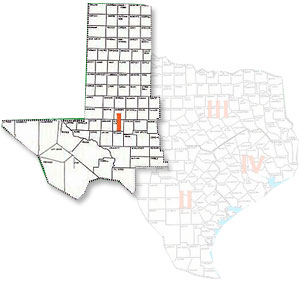
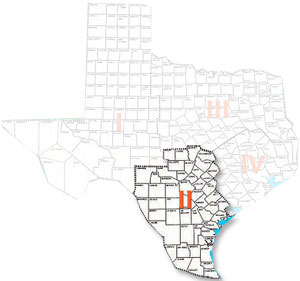
Sponsors of the AIPG-TX GEODAYZ Training Program
2022





2018